
A digital marketing plan should make decisions easier. It does not need a long presentation or a complex dashboard. Begin with the outcome your business needs, the people you want to reach and the evidence that will tell you whether the work is helping.
Start with one business outcome
Choose one primary outcome for the next planning period: qualified enquiries, booked appointments, first purchases or repeat orders. A goal such as “more followers” can describe an activity, but it rarely explains whether the activity is commercially useful.
Write down the intended audience, the action you want that person to take and what a successful enquiry or sale looks like. For example, a local service business might focus on consultation requests from customers within its service area, rather than traffic from anywhere in the world.
“Help people looking for [service] understand their options, then make it easy to request a relevant consultation.” This statement gives content and channel choices a shared purpose.
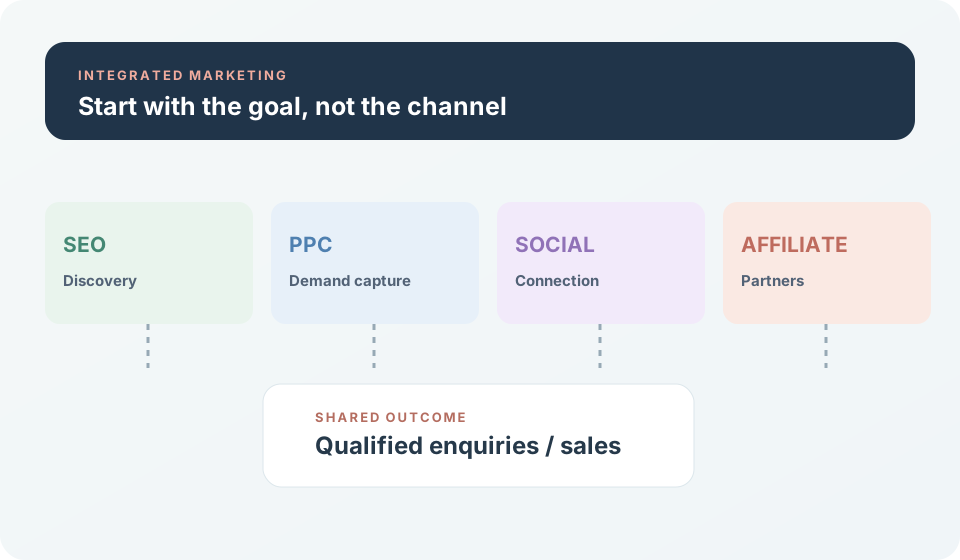
Map the role of each channel
Not every channel needs to be active immediately. Use SEO to answer questions people already search for, paid search to test demand, social channels to earn attention and gather feedback, and partnerships when credible publishers can introduce the offer to a relevant audience.
Pick one primary channel and one supporting channel. Record what each one contributes and how it leads people to a useful page on your own site. A small, consistent program is easier to learn from than a scattered campaign across every platform.
Turn the plan into a four-week routine
Week one is for the baseline: check the website, review existing enquiries and note what is already working. In week two, improve the destination page and create one useful piece of content. In week three, distribute it through the chosen channels or run a small, controlled test. In week four, review results and identify the next adjustment.
Keep the review short. Look at qualified actions, conversion quality and the questions customers ask. Record what changed and why. That running record becomes more valuable than an ever-growing list of disconnected marketing ideas.
Measure decisions, not just activity
Traffic, clicks and impressions help explain reach; they do not by themselves prove impact. Define a small set of measures that connect activity to results. Include the number of useful enquiries or orders, the conversion rate of key pages and the cost of acquiring those outcomes when paid media is involved.
If measurement is incomplete, fix that before increasing spend. An imperfect but honest baseline is better than a polished report built from numbers that cannot guide the next decision.
For a hands-on next step, see a simple measurement workbook.
Before you move on
- One clear business outcome and a relevant audience
- A primary and a supporting marketing channel
- A useful destination page with one obvious next step
- A weekly review of qualified results and customer feedback
Choose one improvement you can make now, write down why it matters and review the result before adding more work.